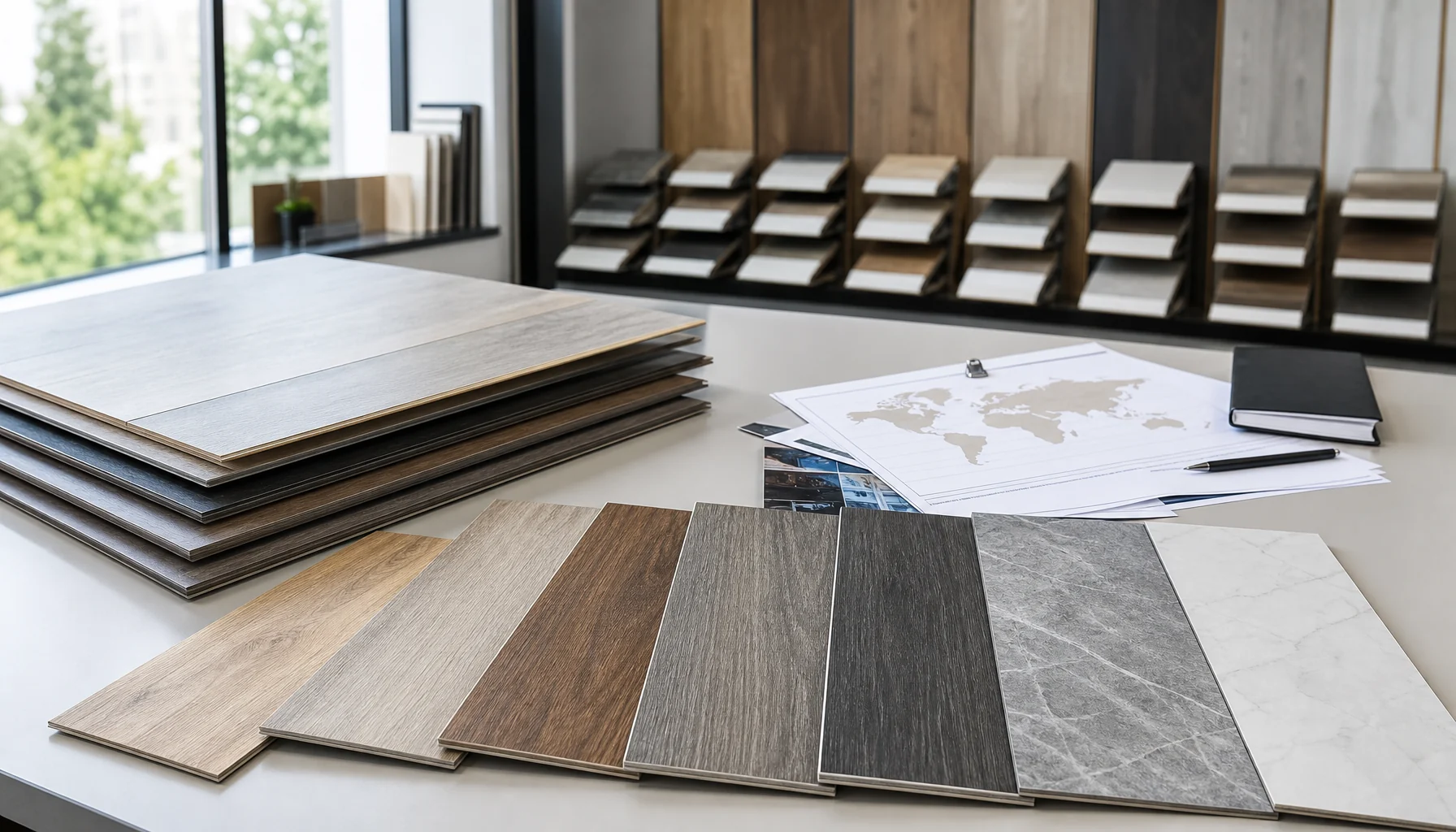
If you are comparing an SPC flooring manufacturer, the country of production matters, but it should never be the only factor. The best supplier choice depends on factory capability, product consistency, certifications, and how well the manufacturer supports samples, technical documents, and export orders.
This guide explains the main SPC flooring manufacturing countries, why shipment data is useful, and what buyers should check before choosing a supplier.
Key Takeaways
– China remains the largest and most established SPC supply base.
– Trade data can help you shortlist countries, but it cannot confirm factory quality.
– Samples, technical documents, and certificates matter more than origin alone.
– A reliable supplier should explain specs, packing, and inspection clearly.
– HRFLOOR supports sourcing with SPC product pages, documents, and export-ready communication.
Why manufacturing country matters for SPC flooring
Country of origin often influences supply chain speed, labor cost, export experience, and product positioning. That does not automatically make one country “better” than another, but it helps buyers understand why some factories focus on value pricing while others emphasize premium design or regional trade advantages.
For importers, distributors, and project buyers, the real question is not only where SPC flooring is made. It is also whether the factory can deliver stable quality, reliable packing, and the documents needed for your market.
A strong SPC flooring manufacturer should make the buying process easier, not more confusing. If the answers are vague before you order, they are unlikely to get clearer after shipment.
How trade data helps you compare SPC flooring manufacturers
Trade data is useful because it shows how often SPC flooring is shipped and which countries are active in export markets. In customs and declaration systems, SPC flooring is commonly associated with HS code 391810, which covers plastic floor coverings in rolls or tiles.
That said, shipment data is only a starting point. It can help you spot manufacturing activity, but it does not replace a factory audit, sample review, or technical document check. A country can show strong shipment volume while individual factories still vary widely in quality and consistency.
Use trade data to shortlist countries, then use samples, datasheets, and certificates to choose the actual supplier.
Top SPC flooring manufacturing countries at a glance
The table below gives a practical overview of the best-known SPC flooring manufacturing countries and how buyers often view them.
| Country | Common buyer impression | Typical strengths | What to verify |
|---|---|---|---|
| China | Largest and most established supply base | Broad product range, export experience, strong capacity, competitive pricing | Factory capacity, wear layer, certification, inspection process |
| Vietnam | Growing export-oriented production | Tariff advantages in some markets, expanding manufacturing investment | Line stability, consistency, lead time, document support |
| India | Developing regional and export supply | Growing domestic demand, improving production capability | Product consistency, export readiness, testing, packing quality |
| United States | Premium and design-led positioning | Higher-end products, closer North American supply for some buyers | Price structure, customization, capacity, delivery terms |
| South Korea | Quality-driven and technology-focused image | Strong technical reputation, careful production standards | Product range, MOQ, certification fit, commercial availability |
Top countries manufacturing SPC flooring
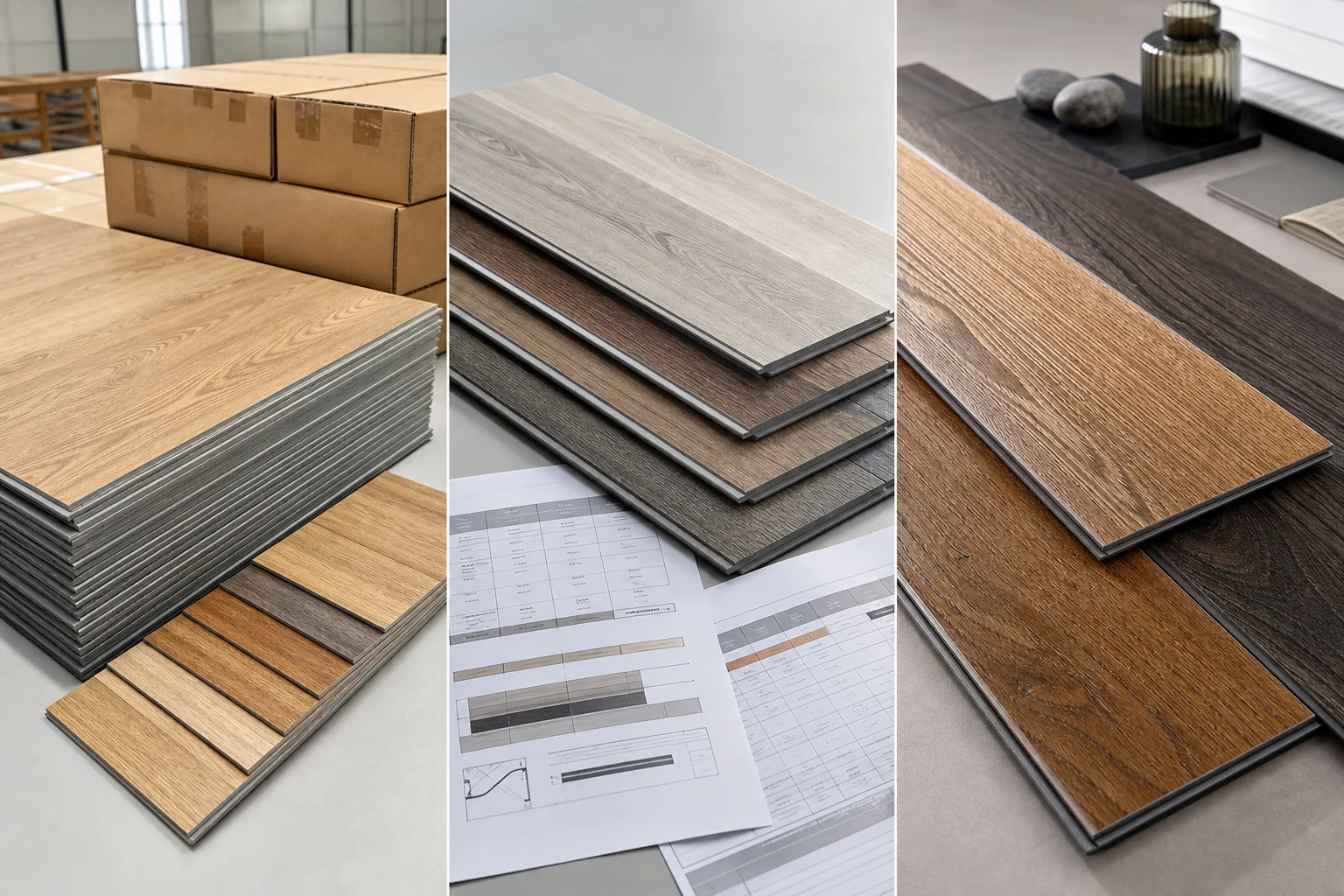
1. China
China is the most important country in the global SPC flooring supply chain. It has the deepest manufacturing base, the widest product range, and extensive export experience across residential, retail, hospitality, and commercial projects.
For many buyers, China remains the first stop when sourcing an SPC flooring manufacturer because it offers scale. That scale matters when you need repeated orders, multiple colors, private-label packaging, or coordinated collections across SPC, LVT, laminate flooring, and SPC wall panels.
What buyers usually value in China:
– Broad design choice, including wood look, stone look, tile look, EIR, herringbone, and chevron.
– Strong export logistics experience.
– Flexible order sizes for wholesale and project supply.
– Access to product documentation such as test reports and technical datasheets.
What to check carefully:
– Whether the factory is a real manufacturer or only a trading company.
– Whether wear layer, thickness, and locking system stay stable across batches.
– Whether the supplier can provide inspection, certificates, and consistent packing.
For buyers who need a direct China source, HRFLOOR is a practical example of an SPC flooring manufacturer based in Changzhou, Jiangsu, China, with export-oriented production and supporting technical documents.
2. Vietnam
Vietnam has become a noticeable SPC flooring production base because of investment growth and its role in regional manufacturing networks. Some buyers also look to Vietnam for tariff and sourcing flexibility, depending on destination market rules.
Vietnam is often attractive when buyers want an alternative to China or are balancing supply across multiple countries. In many cases, the product story focuses on export availability, competitive manufacturing, and regional trade positioning.
What buyers usually value in Vietnam:
– Expanding export manufacturing capacity.
– Competitive supply for selected markets.
– Strategic positioning for buyers seeking diversified sourcing.
What to check carefully:
– Actual factory depth, not just a sales office.
– Product consistency over repeated orders.
– Technical data, certificates, and sample accuracy.
3. India
India is a growing name in the SPC flooring market, especially as domestic flooring demand rises and manufacturers expand into export channels. The country is not always the largest global source, but it is increasingly relevant for buyers who track regional supply changes.
For some markets, India may be viewed as a developing manufacturing option with improving production capability. As with any new source, the value comes from comparing product specifications rather than assuming country-level quality.
What buyers usually value in India:
– Rising manufacturing capacity.
– Stronger access to regional markets in some cases.
– Competitive development potential for future supply.
What to check carefully:
– Export packaging standards.
– Product finish consistency.
– Whether the factory can support the required click system, thickness, and wear layer.
4. United States
The United States is known more for premium positioning and innovation than for low-cost bulk supply. Buyers sometimes look at U.S. manufacturing when design, branding, or regional sourcing matters more than headline price.
This can be useful for certain commercial or retail programs, but it may not be the first choice for buyers seeking the lowest landed cost. In many cases, the U.S. market is also a major importer of SPC flooring, so the local supply picture is only one part of the story.
What buyers usually value in the U.S.:
– Premium product image.
– Shorter supply paths for some North American projects.
– Stronger focus on branded or design-led collections.
What to check carefully:
– Price competitiveness.
– Product availability for bulk orders.
– Whether the manufacturer can match your required specification and lead time.
5. South Korea
South Korea has a reputation for technical quality and careful production standards. Buyers often associate Korean flooring with refined surface design, product development, and quality control.
For SPC flooring, that reputation can be valuable when a project needs a specific finish or a higher-end market story. However, buyers should still evaluate the manufacturer itself rather than relying only on national reputation.
What buyers usually value in South Korea:
– Technology-led manufacturing image.
– Quality-focused positioning.
– Strong design expectations.
What to check carefully:
– Range of commercial specifications.
– MOQ and shipment flexibility.
– Whether the product line fits your market’s price band.
How to choose the right SPC flooring manufacturer

Choosing a country is only the first step. The real decision is choosing the right supplier inside that country.
1. Check factory capability
A reliable factory should be able to explain its production lines, monthly output, and quality-control process in plain English. If the supplier cannot clearly explain how the product is made, packed, and inspected, that is a warning sign.
Look for:
– Stable production capacity.
– Clear product categories.
– Repeatable quality control.
– Export packaging experience.
2. Ask for technical documents
Before you place an order, request the documents that matter to your project or market. This may include certificates, test reports, technical datasheets, and installation guidance.
Useful documents include:
– Wear layer and thickness specifications.
– VOC or indoor air quality reports when relevant.
– Fire or slip-resistance reports when required.
– Installation guides for the relevant click system.
You can review HRFLOOR’s technical documents and quality certificates when evaluating product proof.
3. Compare samples, not just product photos
Photos can show color and texture, but they cannot tell you whether the locking system is accurate or whether the surface finish is consistent. Samples give you a better way to check plank edge quality, surface texture, core rigidity, and batch consistency.
When comparing samples, ask:
– Does the color match the catalog?
– Is the click profile clean and secure?
– Is the wear layer consistent?
– Does the backing or underlayment match the specification?
4. Match the factory to the market
A supplier that is perfect for one market may not be ideal for another. For example, a project buyer may care most about technical documentation, while a retailer may focus on visual range and repeat stock availability.
Choose based on:
– Target market.
– Installation method.
– Budget range.
– Performance requirements.
– Certificate requirements.
What trade data can and cannot tell you
HS code and shipment data are helpful for spotting active manufacturing countries, but they do not tell you whether one factory is better than another. They also cannot show the quality of the locking system, the stability of the wear layer, or the accuracy of color matching.
Use trade data as a research tool, not a final decision tool. Then confirm your shortlist with:
1. Product sample review.
2. Technical datasheets.
3. Certificate checks.
4. Factory communication.
5. Order and packing confirmation.
Why HRFLOOR is relevant to this sourcing topic
HRFLOOR is a China-based flooring manufacturer in Changzhou, Jiangsu, focused on SPC flooring, LVT flooring, laminate flooring, SPC wall panels, and MgO flooring. That gives us a manufacturer-level view of what buyers should really verify before choosing a supplier.
For sourcing decisions, that usually means checking:
– Product structure.
– Wear layer and thickness.
– Click-lock system.
– Certifications and test reports.
– Packaging and export support.
If you are comparing suppliers, it helps to work with a factory that can provide both product information and practical documents. You can also explore HRFLOOR’s about page for company background and export context.
FAQ
China is generally the largest and most established producer of SPC flooring. It offers the broadest manufacturing base, strong export experience, and a wide product range.
Not necessarily. Country origin can affect price, logistics, and supply style, but the actual factory matters more than the country alone.
Ask for samples, technical datasheets, certificates, wear layer details, thickness, click system information, lead time, and packing specifications.
HS code 391810 is commonly used for plastic floor coverings in trade data. It helps buyers research shipment activity and export patterns for SPC flooring.
Request factory details, product documents, sample boards, inspection evidence, and export references. A real factory should explain its process clearly and consistently.
Conclusion
If you are sourcing from an SPC flooring manufacturer, start with the country comparison, but finish with factory proof. China remains the strongest global supply base, while Vietnam, India, the United States, and South Korea each bring different strengths depending on market, budget, and project needs.
The best next step is to compare samples, review documents, and confirm the supplier’s production capability before placing a bulk order. If you are evaluating suppliers now, contact HRFLOOR to request SPC samples, the latest catalog, or technical datasheets.
发表回复