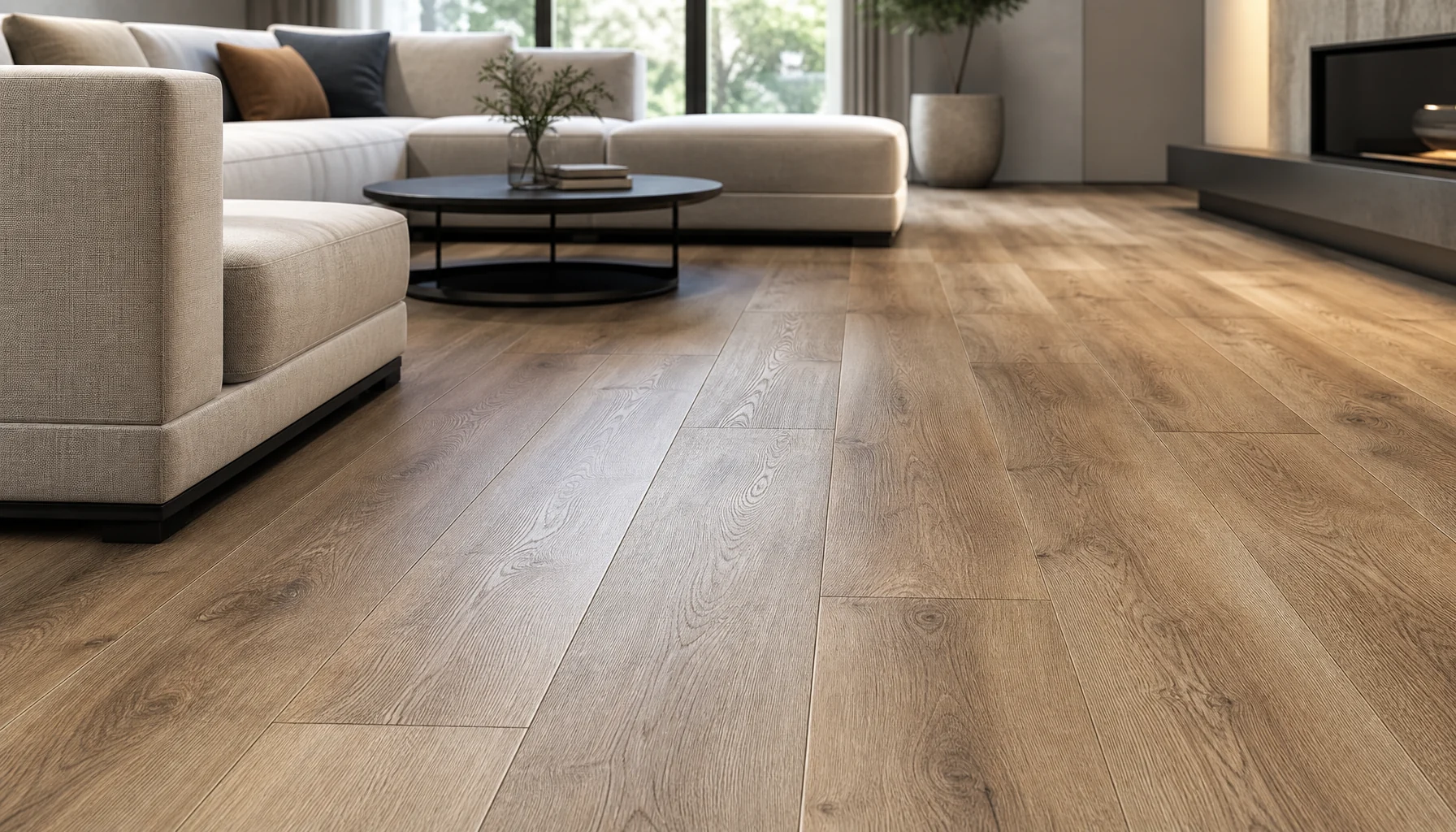
SPC flooring is a rigid core vinyl floor made from limestone powder, PVC, and stabilizers. It is a practical option when a room or project needs water resistance, dimensional stability, and easy maintenance.
If you are comparing floors for kitchens, bathrooms, retail spaces, apartments, or hotel rooms, this guide explains the structure, main benefits, limits, price factors, and what to check before you buy.
Key takeaways
- SPC stands for Stone Plastic Composite.
- Its rigid core helps the floor stay stable in daily use.
- Wear layer, thickness, click system, and underlayment affect real performance.
- It is often chosen for moisture-prone and high-traffic spaces.
- For sourcing, ask for samples, technical datasheets, and test reports before confirming an order.
What is SPC flooring?
SPC flooring is a rigid core vinyl floor designed for durability and moisture resistance. It combines a printed decorative layer, a protective wear layer, and a dense core that helps the floor resist dents and movement.
You will often see it used in homes, retail stores, office spaces, hotel corridors, and renovation projects where stable performance matters more than a soft feel underfoot.
How SPC flooring is structured
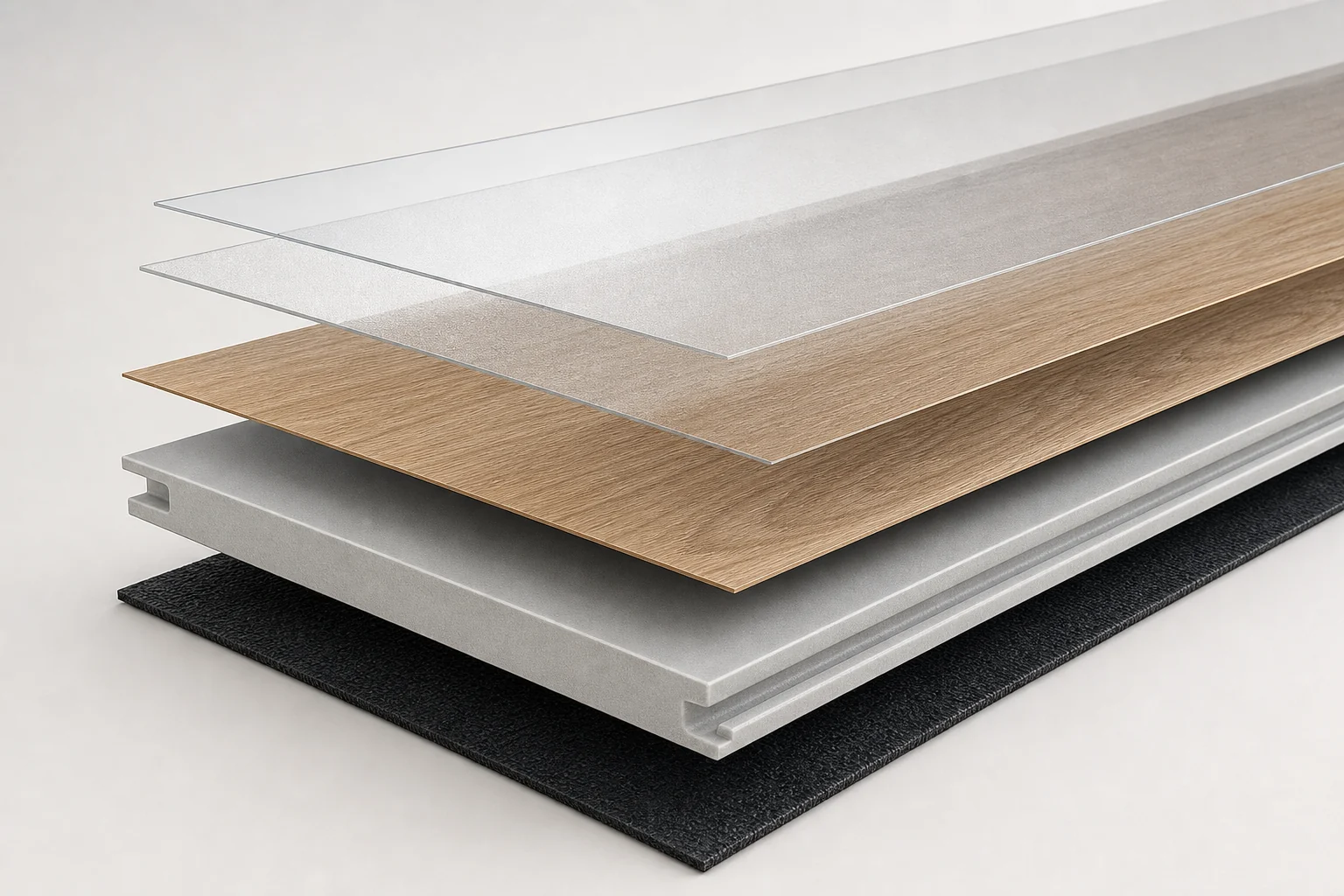
SPC flooring is built in layers, and each layer affects appearance, comfort, and performance.
| Layer | What it does | Why it matters |
|---|---|---|
| UV coating | Protects the surface | Helps resist stains, fading, and daily wear |
| Wear layer | Shields the design film | Improves scratch and abrasion resistance |
| Decorative film | Creates the wood, stone, or tile look | Defines the visual style |
| Rigid core | Provides strength and stability | Helps the floor stay flat and dimensionally stable |
| Backing or underlayment | Adds comfort and sound support | Can improve walking feel and reduce noise |
UV coating
The UV coating is the top surface treatment. It helps protect the floor from everyday wear and makes cleaning easier.
Wear layer
The wear layer is one of the most important specifications to check. A thicker wear layer usually offers better resistance to surface damage in busy areas, although the right choice depends on traffic level and budget.
Decorative layer
This printed layer gives the floor its wood, stone, or tile appearance. Good design work can make SPC look surprisingly close to natural materials, especially in EIR and matte finishes.
Rigid core
The rigid core is what separates SPC from many traditional vinyl products. It gives the floor a denser, harder feel and helps improve stability in changing temperatures and humid spaces.
Backing and underlayment
Some products include attached underlayment such as IXPE, EVA, or XPS. This layer can improve comfort, sound performance, and installation convenience, but the best option depends on the project. For a more detailed comparison, see our IXPE vs. EVA underlayment guide.
Main features and benefits
SPC flooring is popular because it balances practical performance with broad design choice.
Water-resistant and moisture-friendly
This flooring is widely used in kitchens, bathrooms, basements, and other moisture-prone areas. The core itself is not affected by water in the same way as wood-based flooring, which makes it a practical option for humid environments.
Good dimensional stability
Because of its rigid core, this flooring usually handles temperature changes and daily traffic better than many flexible flooring types. That makes it a strong option for rooms that need a flatter, more stable surface.
Durable for daily use
A properly specified floor can handle residential traffic and many light-to-medium commercial applications. The wear layer is especially important here, because it protects the printed design from abrasion.
Easy to install and maintain
Most products use a click-lock system, which supports floating installation in many projects. It is generally easier to clean than porous materials, and routine care usually only requires sweeping and damp mopping.
Wide design range
This flooring is available in wood look, stone look, marble look, tile look, herringbone, chevron, and parquet-inspired designs. That makes it useful for both practical renovation and design-led interiors.
Good value for many projects
This product often offers a lower installed-cost path than natural stone, ceramic tile, or hardwood, especially when installation speed and maintenance are factored in. It is not the right answer for every room, but it is often a cost-effective choice.
Tip: For any project, compare wear layer, core stability, installation method, and documents before comparing price alone.
Limitations to consider
This flooring is practical, but it is not ideal for every application.
It feels harder underfoot than some vinyl floors
Because the core is rigid, it can feel firmer than WPC or some traditional LVT products. If comfort is your top priority, compare it carefully with softer alternatives.
It cannot be refinished like wood
This material does not get sanded and refinished the way solid wood does. Once the wear layer is damaged, replacement is usually the solution.
Surface quality still matters
Not all products perform the same. A low-grade floor may have weak locking strength, inconsistent dimensions, or poor surface protection. This is why samples and specifications matter so much.
How to choose before you buy
If you are sourcing this flooring for a home, store, or project, use a simple checklist.
1. Check the thickness
Common thicknesses vary by market and application. Thicker boards often feel more substantial, but thickness should still match subfloor condition, budget, and use case.
2. Check the wear layer
The wear layer helps determine how well the surface handles traffic and abrasion. Light residential use may need less protection than retail or hospitality spaces.
3. Check the click-lock system
A reliable click system helps installers achieve faster floating installation and cleaner joints. If you are comparing locking methods, review our installation guides and technical resources before placing an order.
4. Check the underlayment
Attached underlayment can improve comfort and sound performance, but not every project needs the same build-up. For more background, read our underlayment comparison article.
5. Check the surface finish
Gloss level, embossing, and EIR texture all affect appearance. A matte or ultra-matte finish may suit modern interiors, while EIR can add realism to wood-look designs.
6. Check documents and samples
Before confirming a bulk order, ask for technical datasheets, test reports, and samples. This helps you compare quality, appearance, and installation behavior before you commit.
If you want to explore product options, you can also review the HRFLOOR SPC flooring page or contact our team for samples and quotation support.
SPC flooring price: what affects the cost?
The price depends on more than just the board itself. If you see a low number without specification details, compare carefully.
Main price factors
- Thickness
- Wear layer
- Surface texture and finish
- Attached underlayment
- Click system
- Design complexity
- Packaging and order volume
- Certification and testing requirements
- Shipping and destination market
Practical buying note
Instead of asking only for a square-meter price, ask for the full specification. A slightly higher-priced product may be better value if it offers stronger locking performance, better wear resistance, or more reliable documentation.
SPC flooring vs. other flooring types
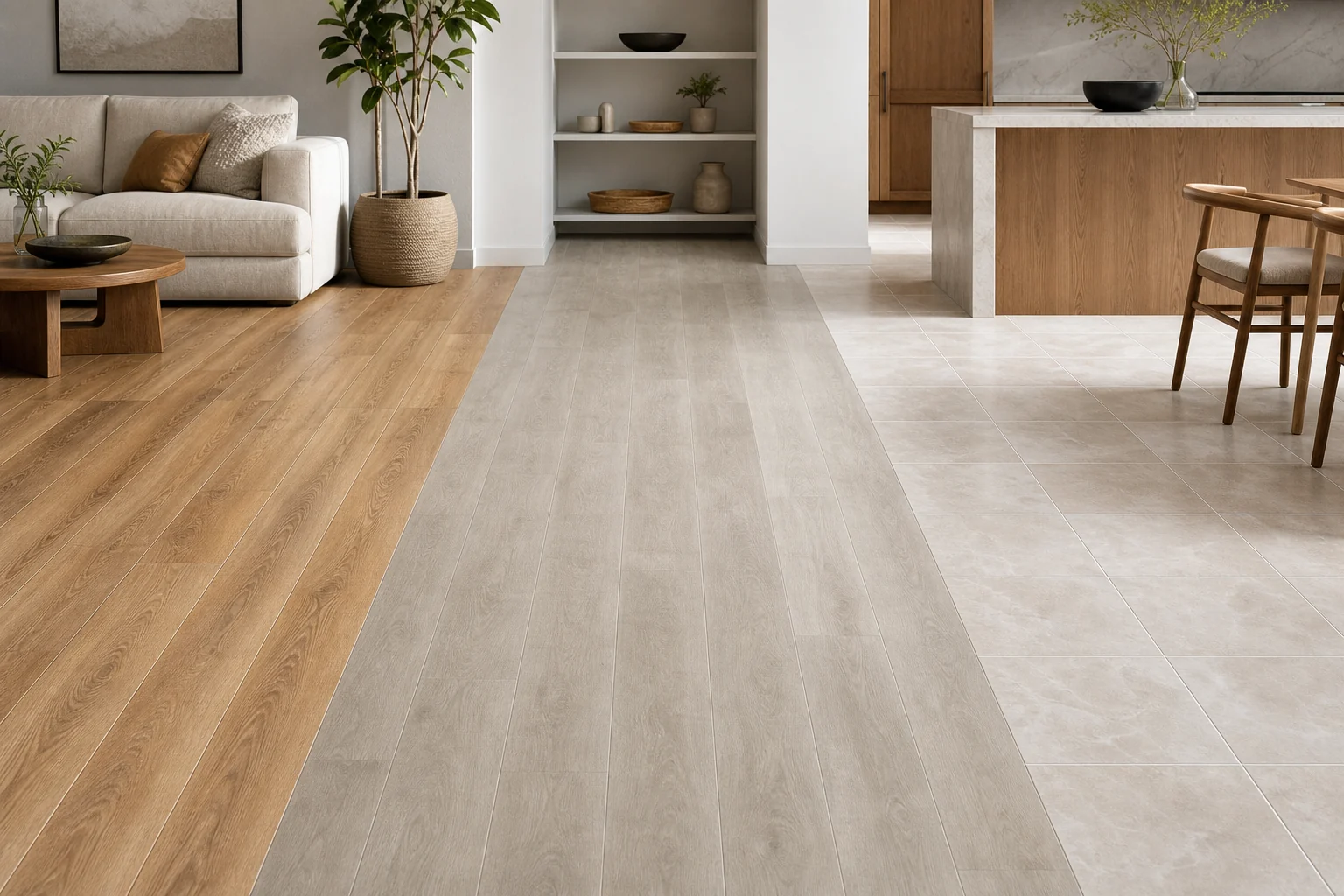
This flooring is often compared with LVT, laminate flooring, and ceramic tile. Each material has a different balance of comfort, stability, and installation speed.
| Comparison | SPC flooring advantage | When another option may be better |
|---|---|---|
| SPC vs. LVT | More rigid and dimensionally stable | LVT may feel softer and more flexible |
| SPC vs. laminate | Better moisture resistance | Laminate may suit some dry-area budgets |
| SPC vs. tile | Faster installation and easier replacement | Tile may suit very high-heat or traditional ceramic applications |
If you are comparing product categories in more detail, see our vinyl flooring comparison guide and SPC flooring vs. tile article.
HRFLOOR support for buyers
HRFLOOR manufactures this flooring in Changzhou, China, and supports buyers with product guidance, catalogs, samples, and technical resources. For project or sourcing discussions, it is useful to compare specification details rather than color alone.
You can use the following resources:
- SPC flooring product page
- SPC flooring technical reports and datasheets
- Product catalogs and technical documents
- Request samples or quotation
FAQ
It is widely used as a waterproof or highly water-resistant flooring option. That makes it suitable for kitchens, bathrooms, and other moisture-prone areas, but subfloor preparation and installation still matter.
Yes, it can be a good choice for many commercial spaces. It is often selected for retail stores, offices, hotel rooms, and corridors where durability, ease of cleaning, and stability are important.
This floor has a rigid core, while LVT is usually more flexible. SPC is often chosen when stability and water resistance are priorities, while LVT may be preferred where a softer feel is more important.
The right wear layer depends on traffic level and project type. Residential rooms may need less surface protection than retail, hospitality, or other high-use areas.
In many projects, yes, it can be installed as a floating floor over existing hard surfaces if the base is clean, flat, and dry. Always check leveling and installation requirements first.
Many products use a click-lock system and do not need glue. However, some project specifications may require different installation methods, so always confirm the product system first.
Conclusion
SPC flooring is a practical rigid core vinyl flooring option for readers who want water resistance, stable construction, and a wide choice of designs. It is especially useful when maintenance, installation speed, and moisture resistance matter more than the soft feel of wood-based flooring.
If you are comparing this flooring for a home or project, start with the structure, wear layer, click system, and support documents. For samples, technical datasheets, or pricing guidance, contact HRFLOOR and request the latest product information.